
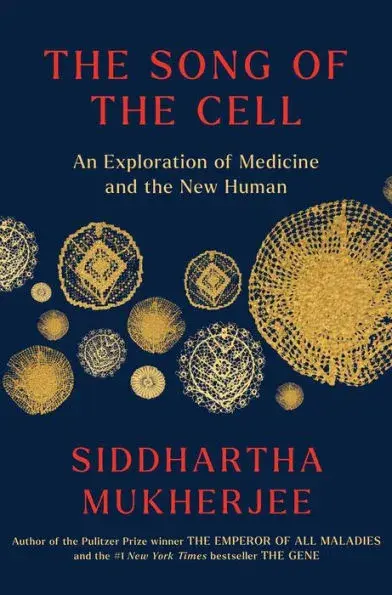
From the author of The Emperor of All Maladies, winner of the Pulitzer Prize, and The Gene, a #1 New York Times bestseller, comes his most spectacular book yet, an exploration of medicine and our radical new ability to manipulate cells.
It was the fact that complex living organisms are assemblages of tiny, self-contained, self-regulating units. Our organs, our physiology, our selves—hearts, blood, brains—are built from these compartments. Hooke christened them “cells”. The discovery of cells—and the reframing of the human body as a cellular ecosystem—announced the birth of a new kind of medicine based on the therapeutic manipulations of cells. A hip fracture, a cardiac arrest, Alzheimer’s dementia, AIDS, pneumonia, lung cancer, kidney failure, arthritis, COVID pneumonia—all could be reconceived as the results of cells, or systems of cells, functioning abnormally. And all could be perceived as loci of cellular therapies.
In The Song of the Cell, Mukherjee tells the story of how scientists discovered cells, began to understand them, and are now using that knowledge to create new humans.
He seduces you with writing so vivid, lucid, and suspenseful that complex science becomes thrilling. Told in six parts, laced with Mukherjee’s own experience as a researcher, a doctor, and a prolific reader, The Song of the Cell is both panoramic and intimate—a masterpiece.
The Song of the Cell: The Transformation of Medicine and the New Human
Scribner